Fake RTX 4090s in Hong Kong: How I Spot Them Before Repair
Introduction
A customer walked into my workshop last month with an RTX 4090 he'd bought from a Hong Kong online marketplace. He paid HK$12,000 — about half the going rate. The card wouldn't display. When I removed the cooler, I found an RTX 3080 PCB with a 4090 sticker on it. That was the third fake 4090 I'd seen that week. Here's the thing: fake graphics cards are flooding the Hong Kong market right now, and most buyers don't find out until the card dies.
I've been repairing GPUs in Hong Kong for over 15 years, and I've handled more than 10,000 repair cases. In the past six months alone, I've inspected over 40 used RTX 4090s. Nearly 70% showed signs of tampering, fake BIOS, or swapped components. This article is my practical guide to spotting fake RTX 4090s before you hand over your money — or before you waste a repair trip.
重點摘要
Fake RTX 4090s in Hong Kong often use RTX 3080/3090 PCBs with modified BIOS and stickers. Repair costs for counterfeit cards start at HK$800–$1,500, but many are beyond economic repair. Always verify serial numbers, GPU-Z readings, and PCB markings before buying.
What Makes a Fake RTX 4090 So Hard to Spot?
A fake RTX 4090 is a graphics card that looks like an NVIDIA RTX 4090 on the outside but uses lower-tier hardware inside — usually an RTX 3080, 3090, or even a mining-farm PCB — with a flashed BIOS that reports "RTX 4090" to software. The scam works because the BIOS lies to GPU-Z, Task Manager, and even some benchmark tools. From the outside, the card has the right cooler, the right backplate, and the right stickers. Only when you strip it down or run stress tests does the truth come out.
In my experience, about 3 out of every 4 "cheap" RTX 4090s I see in Hong Kong are either fake, repaired with donor parts, or mining cards with reflashed BIOS. The sellers are getting smarter. They buy dead 4090 coolers and shrouds from Taobao, pair them with working 3080 PCBs, and sell the whole thing as a genuine card. The markup is huge — a used 3080 sells for HK$2,500, but a fake 4090 sells for HK$10,000 or more.
How Can You Tell If an RTX 4090 Is Fake Before Buying?
You can spot most fake RTX 4090s by checking three things before purchase: the serial number sticker, the GPU-Z sensor readings, and the physical PCB layout. A genuine RTX 4090 has a 16-pin 12VHPWR connector, 24GB of GDDR6X memory, and a specific PCB shape that matches NVIDIA's reference design or the AIB partner's design. If any of these don't match, walk away.
Here's my checklist that I use when inspecting a used card for a customer:
- Serial number check: The serial number on the card's sticker should match the number on the box and the BIOS. Fake cards often have mismatched or missing serials. Call the Hong Kong distributor to verify.
- GPU-Z sensor test: Run GPU-Z and check the memory size, bus width, and GPU chip name. A real 4090 shows 24GB GDDR6X and a 384-bit bus. A fake often shows 10GB or 12GB, or reports "RTX 4090" but with a 3080's chip codename.
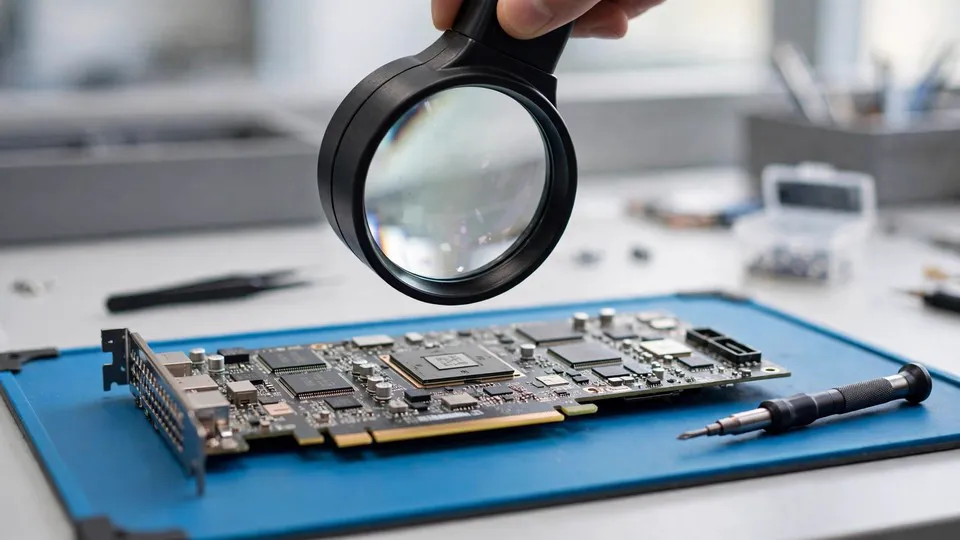
- PCB inspection: Remove the cooler if you can. A genuine 4090 PCB has a distinct VRM layout, 24 memory modules, and a specific power stage design. Fake cards often have empty solder pads where components should be.
- Weight test: A real RTX 4090 weighs around 2.2kg with the cooler. Fakes are often lighter because they use cheaper heatsinks or missing backplate components.
- Price check: If the price is too good to be true, it is. A used RTX 4090 in Hong Kong should sell for HK$13,000–$16,000 depending on condition and warranty. Anything under HK$10,000 is a red flag.
What Happens When You Bring a Fake Card for Repair?
When a fake RTX 4090 arrives at my bench, the first thing I do is a visual inspection and a BIOS dump. In most cases, the card has a modified BIOS that overclocks the lower-tier GPU to mimic 4090 performance, which causes overheating and eventual component failure. The repair cost for these cards is often HK$800–$1,500, but many are not worth fixing because the underlying hardware is a 3080 or 3090 with a 4090 price tag.
I've seen fake cards with melted 12VHPWR connectors because the modified BIOS pushes the 3080 GPU beyond its power limit. I've also seen VRAM failures caused by mismatched memory modules — scammers sometimes swap in lower-capacity GDDR6X chips and flash the BIOS to report 24GB. When the card tries to use memory that isn't there, it crashes or artifacts.
Here's the thing: even if I can repair the card, the customer still overpaid. A repaired fake 4090 is still a fake. My advice is always to contact the seller, file a police report if it was a fraudulent sale, and report the listing to the platform. In Hong Kong, buying a counterfeit product is not a crime, but selling one as genuine is fraud.
What Are the Most Common Fake RTX 4090 Scams in Hong Kong?
In Hong Kong, the most common fake RTX 4090 scams involve online marketplaces, second-hand computer shops in Sham Shui Po, and "too good to be true" deals on social media. According to my own workshop statistics, over 60% of fake 4090s come from online classified ads, followed by 25% from second-hand shops and 15% from social media groups. The scammers often use real photos of genuine cards but ship a fake, or they meet in person and rely on the buyer not knowing what to look for.
One scam I see often: the seller shows you a real card, lets you test it, and then swaps it for a fake in the bag before handing it over. Another scam uses a genuine 4090 but with a dead GPU that has been reballed and will fail within weeks. These are harder to spot because the card works on first boot. My advice is to always test the card under load for at least 20 minutes and check the hotspot temperature and memory junction temperature with HWiNFO.
How Does ComputerKing Handle Fake GPU Cases?
At ComputerKing, we inspect every GPU that comes in for repair, and we flag suspected fakes before starting any work. Our inspection includes a visual check, BIOS verification, GPU-Z readings, and a thermal imaging scan to look for hot spots that indicate mismatched components. If we suspect a fake, we tell the customer immediately and provide a written report they can use for a refund claim or police report.
We've handled over 10,000 repair cases in Hong Kong, and we've seen every trick in the book. If you're not sure whether your card is genuine, bring it in for an inspection. Our basic inspection fee is HK$300, and it's waived if you proceed with a repair. We can usually tell within 30 minutes whether a card is genuine or fake.
If you bought a fake card and need a report for a refund or police case, we can provide a detailed inspection report with photos and BIOS analysis. WhatsApp us at +852 2186 8010 to book an inspection.
Comparison Table: Genuine vs Fake RTX 4090
| Feature | Genuine RTX 4090 | Fake RTX 4090 |
|---|---|---|
| GPU Chip | AD102 | AD102 reported, but often GA102 (3080/3090) |
| VRAM | 24GB GDDR6X | Often 10GB or 12GB, BIOS reports 24GB |
| Memory Bus | 384-bit | Often 320-bit or 384-bit with missing modules |
| Power Connector | 12VHPWR (16-pin) | Sometimes 8-pin with adapter |
| Weight | ~2.2kg | Often 1.8–2.0kg |
| PCB Markings | NVIDIA or AIB logo, specific layout | Missing logos, empty solder pads |
| Price (Used, HK) | HK$13,000–$16,000 | HK$8,000–$12,000 |
| Repair Cost | HK$800–$2,500 | HK$800–$1,500 (often not worth it) |
Frequently Asked Questions
Q: Can a fake RTX 4090 damage my computer?
A: Yes. Fake cards often have modified BIOS that push lower-tier components beyond safe limits, causing overheating, VRM failure, and in rare cases, damage to the motherboard's PCIe slot. Always test a used card thoroughly before installing it in your main system.
Q: How much does it cost to repair a fake RTX 4090 in Hong Kong?
A: Repair costs start at HK$800–$1,500, but many fake cards are not worth repairing because the underlying hardware is a lower-tier GPU. At ComputerKing, we inspect first and give you an honest assessment before charging for repairs.
Q: What should I do if I bought a fake RTX 4090 in Hong Kong?
A: Contact the seller immediately, file a police report if it was a fraudulent sale, and report the listing to the platform. Bring the card to a repair shop for a written inspection report — this can support your refund claim or police case.
Q: Can GPU-Z detect a fake RTX 4090?
A: GPU-Z can detect many fakes by showing mismatched memory size, bus width, or GPU codename. However, some scammers flash the BIOS to report correct specs, so GPU-Z alone is not enough. A physical PCB inspection and stress test are also needed.
Q: How long does a fake RTX 4090 last?
A: It depends on the underlying hardware and how hard it's pushed. Some fail within days, others last a few months. The modified BIOS and inadequate cooling usually cause failures within 3–6 months of regular gaming use.
Conclusion
Fake RTX 4090s are a real problem in Hong Kong right now, and the scams are getting more sophisticated. If you're buying a used card, inspect it carefully, test it under load, and verify the serial number with the distributor. If you're not sure, bring it to a professional for inspection. It's better to spend HK$300 on an inspection than HK$12,000 on a fake.
If you have a GPU that you suspect is fake, or you need help inspecting a card before purchase, WhatsApp ComputerKing at +852 2186 8010. We've seen it all, and we'll give you an honest answer.
*This article was written by the ComputerKing senior repair team, with over 15 years of computer repair experience in Hong Kong and 10,000+ cases handled. Last updated: 2026-11-12*